[email protected] Shenzhen, Guangdong, China Onsite-Checked Manufacturer · Avg. Reply ≤ 4h
0%

Choosing a Solar Bicycle Light With Horn means balancing visibility, warning reach, charging conditions, and everyday practicality. The need is real, but no accessory can guarantee safety. The World Health Organization’s Global Status Report on Road Safety 2023 estimates that 1.19 million people die in road crashes each year worldwide. NHTSA’s Traffic Safety Facts for 2022 also recorded 1,105 bicyclist deaths in the United States. These figures describe broader road risks; they do not prove that one light or horn prevents collisions.

A useful comparison starts with the route. A rider crossing dim streets may value a focused beam and clearly visible side lighting. Someone commuting in daylight may care more about flashing modes and easy controls. Check the beam pattern, stated brightness, battery capacity, horn sound level, mounting stability, and weather-resistance details. Then look for independent test information, not only product-page claims. Small print matters.

Solar charging can extend use, but its output depends on sunlight, panel placement, and riding time. A cloudy week may expose a weak backup plan. Check whether the unit also supports USB charging, and ask how long the light runs with the horn in regular use. Manufacturer figures may reflect ideal conditions, so treat them as a starting point, not a promise. There is no perfect specification sheet. This guide explains what to compare, which claims deserve scrutiny, and how to choose a Solar Bicycle Light With Horn that fits your route and routine.
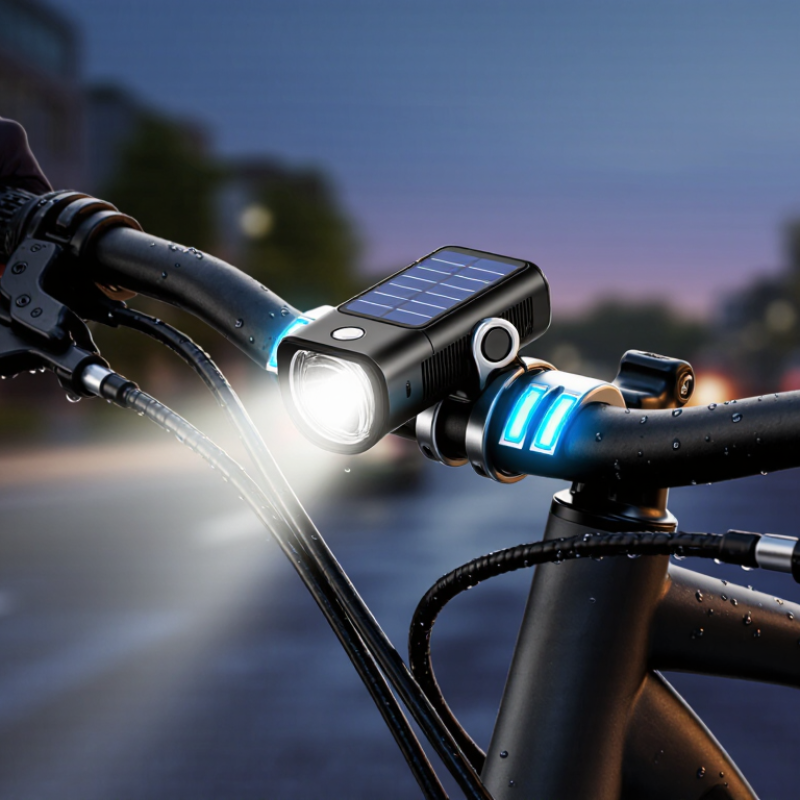
How to Choose a Solar Bicycle Light With Horn?

Define Your Riding Needs and Check EN ISO 6742-1 Bicycle-Light Requirements

How to Choose a Solar Bicycle Light With Horn?

Start with your usual routes. A dimly lit lane, a busy commute, and a daytime trail place different demands on a bicycle light. Check whether the beam helps you see the road or mainly helps others notice you. Then consider the horn: its button should be easy to reach without shifting your grip, and its sound should be clear in traffic. Solar charging can help, but shade and short rides may limit stored power. I learned that the hard way on a cloudy week.

Check the product documents for EN ISO 6742-1 coverage and the edition tested. This standard addresses bicycle lighting and light-signalling devices, including performance and test requirements. Look for clear details about light output, visibility, operating modes, and mounting. A standard reference alone does not prove that every setting suits your roads or meets local rules. Verify the documentation, and check your area’s current bicycle-light requirements. Test it at dusk.

Tips: Mount the light securely, then check its aim from a few metres away. Make sure the horn control does not block the beam or interfere with braking. Recharge fully before relying on solar input for a long ride.

Compare Beam Output: StVZO Lights Commonly Offer 10-, 20-, and 40-Lux Classes

When choosing a solar bicycle light with a horn, compare the beam, not just the headline number. CIE’s International Lighting Vocabulary defines illuminance in lux as luminous flux falling on a surface; one lux equals one lumen per square metre. A 10-lux light can work on already-lit streets, while 20 lux offers more useful visibility on mixed routes. A 40-lux option may help on darker paths, but its beam shape and aim still matter. Not the whole story.

Treat 10, 20, and 40 lux as common product tiers, not universal StVZO classes. Germany’s StVZO §67 addresses bicycle lighting and beam requirements; a lux figure alone does not show whether a lamp has a controlled, glare-conscious beam. Check the maker’s test information and compare figures measured under the same conditions. A bright central spot can leave the road edges dim. Horn use and limited solar charging can also reduce convenience, especially on long rides.

Tip: Aim the light at the road, not at eye level. Test it at dusk on your usual route, and check whether the horn is easy to reach without releasing the handlebar. If the solar panel cannot replenish the battery during your ride, plan to charge it separately. That detail is easy to overlook.

Size Solar Charging with IEC 60904 Test Conditions of 1,000 W/m² and 25°C

When choosing a solar bicycle light with a horn, treat the panel rating as a laboratory reference, not a daily promise. IEC 60904 measurements use irradiance of 1,000 W/m² and a cell temperature of 25°C. These controlled conditions help compare photovoltaic output fairly. They rarely match a moving bicycle, where clouds, shade, dirt, and panel angle change exposure. Check whether the stated rating describes the panel alone or the complete charging system.

Estimate energy needs before judging panel size. A light drawing 2 watts for three hours uses about 6 watt-hours, before conversion losses. Add the horn’s brief power demand and the battery’s reserve. A horn sounds for seconds, but it still needs a battery able to supply its peak current. Small details matter. Ask for battery capacity in watt-hours and charging data under realistic conditions, not just peak panel watts. A compact handlebar panel may collect far less energy when tilted away from the sun.

Use the IEC test figure as a baseline for comparison, then allow for weaker real-world input. A panel producing 1 watt under test conditions will not reliably replace 1 watt every riding hour. Charging can stall under tree cover or during winter commutes. I would leave a margin rather than size the system exactly to the calculated load; the estimate is imperfect. Check that the light remains usable after cloudy days, and test charging while the bicycle is parked in its usual spot.

Evaluate Horn Sound Levels in dB and Confirm Local Bicycle Rules

A horn’s decibel rating is useful only when you know how it was measured. Check the stated distance and whether the figure uses dB(A), which better reflects how people hear sound. Compare models measured under similar conditions. A phone sound-meter app can offer a rough check, but it is not a calibrated instrument. Test it outdoors, away from traffic and walls that reflect sound. Small details matter.

Before buying, check your local bicycle rules. Requirements may cover whether a horn is allowed, whether a bell is also required, or how loud a warning device can be. Rules can differ between cities and regions, so consult an official transport or municipal source rather than relying on a seller’s description. If the rules are unclear, ask the relevant local authority. Avoid assuming that louder is automatically safer; a sharp blast at close range can startle pedestrians and riders.

For a solar bicycle light with a horn, check that the horn still works when sunlight is limited and the battery is low. Try the controls with gloves on, and make sure the sound outlet is not blocked by a bag or handlebar accessory. A rating on paper may not match what you hear on a windy street. I’ve found that placement changes the impression more than expected, though that is not a precise measurement.

Check Weather Protection: IPX4 Covers Water Splashes from Any Direction

When choosing a solar bicycle light with a horn, check its water rating before focusing on brightness or sound. IEC 60529, the international enclosure-protection standard, defines IPX4 as protection against splashing water from any direction. The “X” means no dust-protection rating is specified. In practical terms, passing showers and road spray should be within scope; submersion is not. Not a diving light.

Look closely at the charging port, solar panel edges, horn button, and cable joints. These small openings can collect gritty water, especially when a front wheel throws spray upward. IPX4 describes standardized testing, not a promise that every unit stays sealed after drops, cracked covers, or years of sun exposure. That distinction matters. After a wet ride, dry the light and check its cover before charging; don’t assume the solar panel makes the electronics weatherproof. A snug port flap and intact seals are useful details to inspect, even when the label says IPX4. If the horn sounds weak or the light flickers after rain, stop relying on it until it has dried and been checked. A rating helps, but wear still counts.

FAQS

What do IEC 60904 solar panel ratings measure?

They compare photovoltaic output under controlled conditions: 1,000 W/m² sunlight and a cell temperature of 25°C. Real rides vary.

Does a panel rated at one watt always produce one watt while riding?

No. Clouds, shade, dirt, and panel angle can reduce output, sometimes sharply.

How can I estimate the light’s energy needs?

A 2-watt light running for three hours uses about 6 watt-hours, before conversion losses. Add battery reserve.

Why should I check battery capacity as well as panel wattage?

The battery must store energy for the light and supply the horn’s brief peak current. Small details matter.

Can a compact handlebar panel fully recharge the battery?

It depends on sunlight, angle, and use. A panel tilted away from the sun may collect much less energy.

What does an IPX4 water rating mean?

It indicates protection against splashing water from any direction, including ordinary showers and road spray. Not submersion.

Does IPX4 mean the light stays waterproof forever?

No. Drops, cracked covers, and sun exposure can weaken seals. A rating is not a lifetime guarantee.

What should I inspect after a wet ride?

Dry the light, then check the charging-port flap, panel edges, and cable joints before charging. Gritty water can collect there. My check may miss something.

Conclusion

Choosing a Solar Bicycle Light With Horn starts with understanding where and when you ride. Consider your usual routes, visibility needs, riding speed, and how often you can recharge the unit. Check that the light’s design and performance align with relevant EN ISO 6742-1 bicycle-light requirements, then compare beam output. StVZO-style lights are commonly described in 10-, 20-, and 40-lux classes; choose a level that suits your riding conditions and provides a clear, controlled beam.

Next, assess whether the solar panel can realistically support your usage. IEC 60904 test conditions of 1,000 W/m² irradiance and 25°C offer a consistent basis for comparing solar performance, but real-world charging varies with sunlight and angle. Check the horn’s sound level in decibels and confirm it suits local bicycle rules. Finally, look for IPX4 protection if you need resistance to water splashes from any direction, and review the product’s operating and charging guidance before purchase.

Evelyn

Evelyn

Evelyn is a dedicated marketing professional with a deep understanding of the company’s products, market positioning, and customer needs. Through a combination of strategic thinking, industry research, and practical experience, Evelyn helps communicate the value of the company’s solutions to......