Choosing an Electric Bike Rear Basket seems simple until daily riding exposes small design flaws. A basket that looks spacious in a product photo may block a rear light, touch the tire, or shift under uneven weight. The right choice depends on your bicycle’s rack, carrying habits, route conditions, and comfort with installation.
A practical evaluation should begin with measurements. Check the rack width, mounting-hole spacing, basket length, and available clearance above the wheel. Consider what you normally carry: groceries, a work bag, a helmet, or fragile parcels. A steel basket may handle heavier loads, while aluminum can reduce extra weight. Woven materials offer a softer appearance, but they may require more care in rain. Look for a secure base, smooth edges, and a stated load limit from the manufacturer.
Small details matter.
You should also consider how the basket affects handling. Heavy items placed high or far behind the axle can make an electric bike feel less stable, especially when starting or turning slowly. A lid, elastic cord, or compatible cover can help keep belongings secure, but none replaces careful packing. Water resistance is useful, although “weatherproof” does not always mean fully waterproof. This is where product descriptions can feel incomplete. Compare specifications, inspect customer photos, and question unclear claims before buying. The best Electric Bike Rear Basket is not necessarily the largest or cheapest option. It should fit securely, support realistic loads, and remain practical after repeated rides. Some compromise is normal, but avoid one that affects safety.
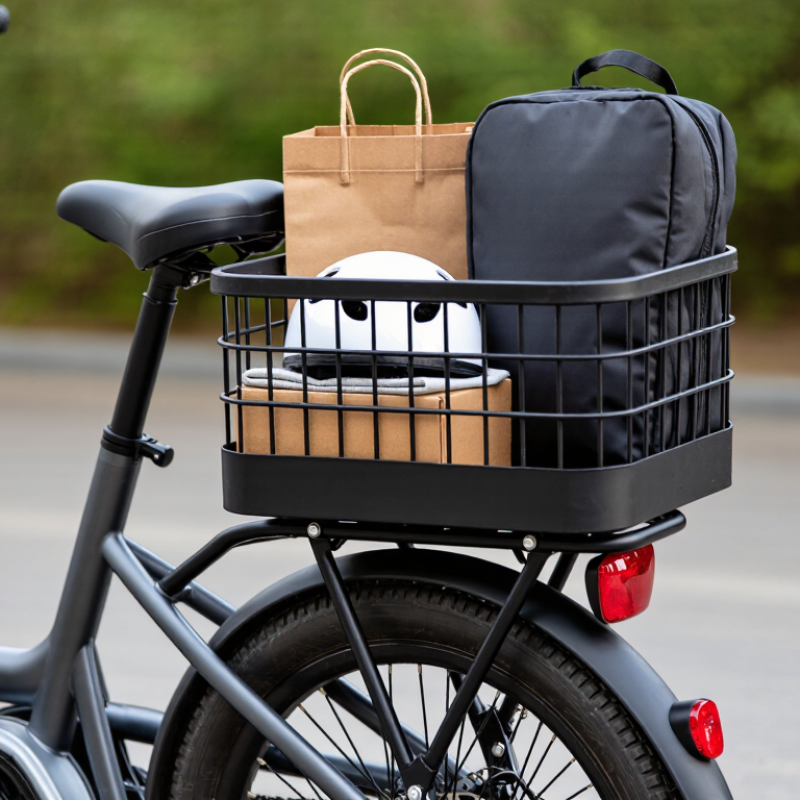
Define Basket Use Cases and Target a 10–25 kg Rated Load
How to Choose an Electric Bike Rear Basket?
Define the basket’s job before comparing shapes or finishes. PeopleForBikes’ 2023 market analysis counted more than one million e-bike sales in the United States during 2022. That growth means riders are carrying groceries, work equipment, and school bags more often. A delivery-style basket may need a 25 kg rating, while daily shopping usually fits a 10–15 kg target.
Measure twice.
A 10–25 kg rated load gives useful flexibility, but the rating applies to the basket and its mounting system. It does not increase the bicycle’s permitted total weight. Check the frame, rack, axle, and manufacturer limits separately. ISO 11243:2016 provides safety and test requirements for bicycle luggage carriers, making it a useful reference when comparing load claims. Still, certification details can be difficult to verify online.
Keep heavy items low and centered. A full basket with bottled drinks can shift the rear wheel during a slow turn. Select a basket with reinforced mounting points, stable side rails, and enough clearance from the tire and brake cables. Waterproof liners help with rain, but they may trap moisture underneath. I would not trust a 25 kg rating for rough roads without checking fasteners after several rides. A smaller basket can be the wiser choice. That matters. Test it with a controlled load before carrying fragile items.
How to Choose an Electric Bike Rear Basket? - Define Basket Use Cases and Target a 10–25 kg Rated Load
| Use Case | Typical Cargo | Recommended Rated Load | Suggested Basket Size | Recommended Construction | Key Selection Criteria |
|---|---|---|---|---|---|
| Daily Commuting | Work bag, rainwear, lunch container, small personal items | 10–15 kg | 35–45 L | Powder-coated steel or reinforced aluminum frame | Choose a basket with a stable base, tie-down points, and enough clearance from the rider’s heels. |
| Grocery Shopping | Packaged food, bottled drinks, reusable shopping bags | 15–25 kg | 45–60 L | Heavy-gauge steel or a reinforced alloy frame with a rigid bottom | Confirm that the rear rack, mounting bolts, and frame are also rated for the intended load; do not rely on the basket rating alone. |
| Picnic and Leisure Trips | Blanket, light cooler, food containers, compact recreation equipment | 10–15 kg | 40–55 L | Lightweight aluminum or coated steel with a corrosion-resistant finish | A removable basket is convenient, while a raised rim helps retain loose items on uneven paths. |
| Pet Transport | Small pet carrier or secured pet travel container | 15–25 kg | 45–60 L | Rigid, smooth-sided basket or platform with a separate secured carrier | A basket should not be used as an open pet enclosure. Secure the carrier, keep ventilation clear, and check the combined weight. |
| Delivery and Errands | Packages, food containers, tools, and small parcels | 20–25 kg | 50–65 L | Reinforced steel or alloy basket with a strong mounting plate | Look for a flat, load-bearing floor, multiple fastening points, and a lid or cargo net to prevent shifting. |
| Light Touring | Clothing, sleeping accessories, cooking equipment, and personal supplies | 10–20 kg | 40–55 L | Corrosion-resistant alloy or coated steel with reinforced attachment points | Prioritize low weight, balanced loading, and compatibility with panniers or other rear-rack accessories. |
FAQS
The basket must fit securely, not simply rest on the carrier. Check the carrier documentation against EN ISO 11243. This standard describes carrier categories, strength, and test methods. It does not automatically certify the attached basket.
Measure the carrier deck, rail spacing, rail diameter, and mounting-hole positions. Also check the basket’s clamps, bolts, and support plates. Leave clearance for the wheel, mudguard, lights, and suspension. Measure twice.
Use clamps or brackets designed specifically for 6 mm tubing. Oversized clamps can permit movement and rattling. Check the hardware before riding on uneven pavement. Loose parts are risky.
Measure the eyelet spacing, hole diameter, and thread size. Common metric bolts may still fail to match exactly. Test each bolt by hand before tightening. It should turn smoothly.
Center the basket over the carrier. Use washers to spread pressure across the rack surface. Tighten each fastener evenly, preferably using the specified torque value. Then shake the empty basket gently.
Follow the carrier’s stated load limit, including the basket and its hardware. Battery weight, motor vibration, and repeated acceleration increase fastener stress. Keep heavy groceries low and near the carrier’s center. Do not guess the limit.
Install the empty basket and gently shake it from side to side. Ride slowly over a quiet, smooth surface. Listen for clicks, rattles, or shifting. Recheck every bolt after the first few trips.
Movement, noise, crooked positioning, or reduced heel clearance are warning signs. Inspect the wheel, fender, brake cable, and light clearance. I once ignored a small gap beneath a clamp. It loosened sooner than expected.
Conclusion
Choosing the right Electric Bike Rear Basket starts with understanding how you plan to use it. Consider whether it will carry groceries, work supplies, personal items, or recreational gear, and select a basket with a suitable rated load, typically between 10 and 25 kg. Before purchasing, measure the rear rack’s width and length, while also checking the available clearance around the seat, fender, and frame to ensure a proper fit.
Compatibility and secure installation are equally important. Confirm that the basket works with a rear carrier meeting EN ISO 11243 requirements, and match its mounting hardware to 6 mm rails or standard rack eyelets. Finally, look for practical safety features such as water-resistant construction, reflectors, and adequate visibility from the rear and sides. A well-fitted basket should remain stable during riding, protect its contents from changing weather, and support safe, responsible use on everyday journeys.